

Choose a stable, dry place inside your home.
A wedding dress can spend months waiting for its next moment: a fitting, a celebration, a care appointment or a future family occasion. In Florida, think about the room as well as the garment. A dry, climate-controlled interior space away from direct sun and heat is a practical starting point. Choose somewhere protected from leaks and flooding, with enough room that the dress or its container will not be crushed.
Avoid an attic, garage or other space where heat and moisture can fluctuate, or a spot beside a window, exterior door, plumbing or air-conditioning equipment that could leak. Do not leave the gown in a car or a sunlit room while plans change. The Canadian Conservation Institute notes that excess moisture can encourage mold and that prolonged light exposure can damage textiles. These are general conservation principles; the right handling and storage for an individual dress depend on its condition and construction. Read the institute’s textile guidance.
Consider the entire path to the storage spot. Can you move the gown without dragging its train, catching a beaded sleeve or pressing it under other belongings? Keep pets, food and cosmetics away from the area, and make sure someone knows where the gown is if you are away or moving home.
Before the wedding, protect the gown between appointments.
Follow the boutique’s or alterations specialist’s instructions for your particular dress. A structured bodice, a delicate veil and a heavily embellished skirt may need different support. Ask how to carry and store the gown between fittings, whether its hanging loops should bear weight and how to protect a long train. Give it space rather than squeezing it between other clothes.
If a dress is fragile, heavy or stretching at its seams, ask a qualified professional how best to support it; do not assume that long-term hanging suits every design. Keep the gown away from sprays and makeup while preparing for the day. If it gets damp or you discover a mark, tell the boutique or care professional what happened rather than attempting an unfamiliar treatment.
Planning a separate pre-wedding cleaning? Share the event and fitting dates before arranging care. A cleaning visit before the wedding is separate from post-wedding care, and its timing needs to be confirmed for your gown.
While your gown awaits care, keep it protected and make a plan.
After wearing, set aside a dry, protected space indoors while you arrange the next step. Let the care provider know about the gown’s fabric and details, visible marks, any dampness and previous treatments you know about. A mark that looks minor may need a different assessment from an older or unknown stain. The Victoria and Albert Museum notes that older stains on delicate wedding-dress fabrics can be difficult or impossible to remove. Read the V&A’s guidance on vintage dresses.
Do not rub a spot, apply a household cleaner or assume a mark will disappear. Tell the care provider if the gown is wet, has a musty smell or shows possible mold before transporting it; ask for instructions suited to its condition. Keep accessories together only if you can do so without putting weight or pressure on the dress, and tell the provider what you hope to include.
If you expect to wear, alter or sell the gown, cleaning only may fit your plans. If you want a keepsake, explore preservation. Our service comparison explains the different next steps.
After preservation, follow the guidance for your presentation.
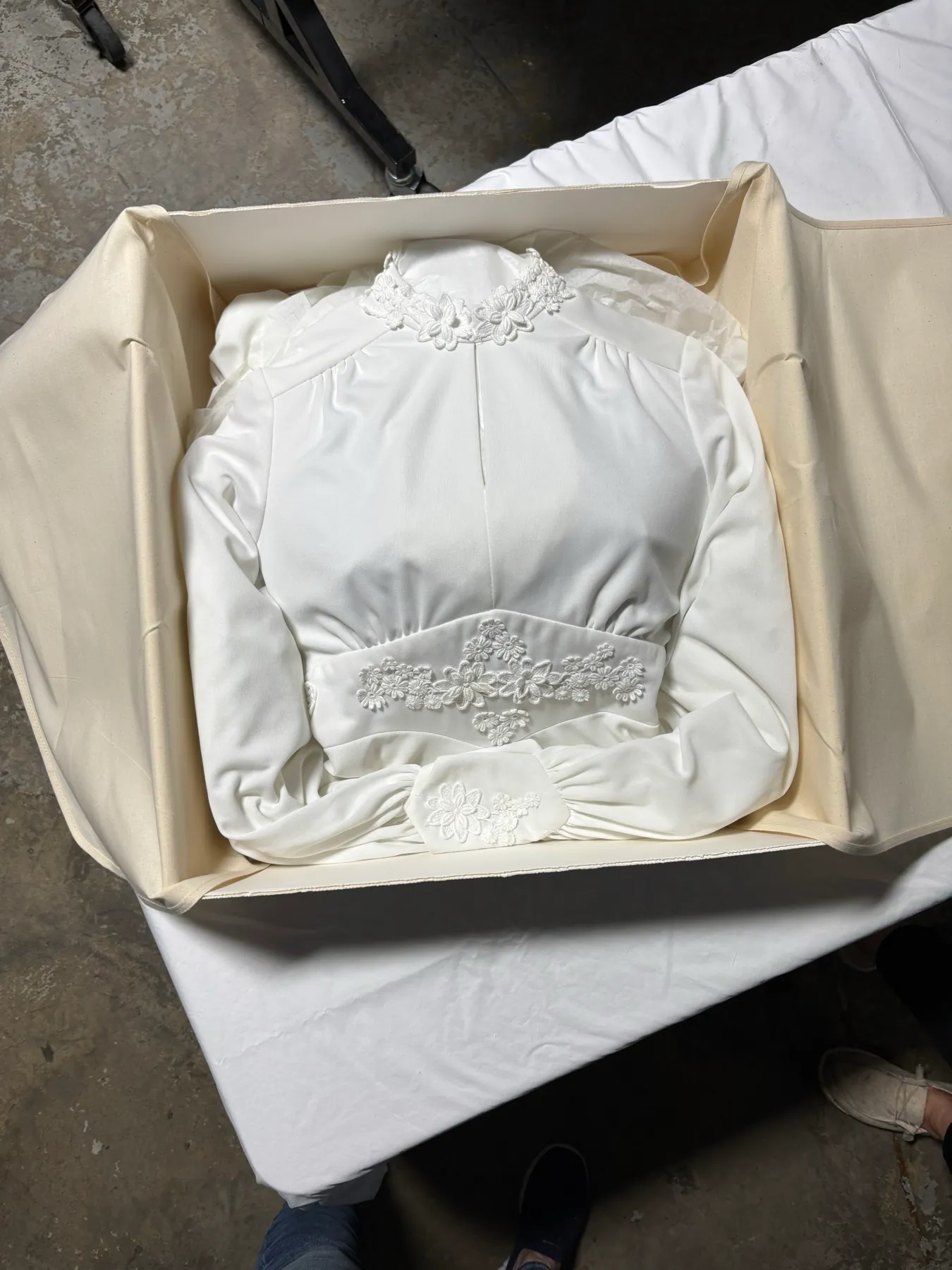
Ask your provider for storage and handling instructions that match the finished presentation and the dress inside. Keep those instructions somewhere you can find them. Before moving the package, choose a dry, climate-controlled interior place away from light, heat and likely water exposure. Leave enough space around it to avoid crushing or accidental spills.
Coastal uses the Foster-Stephens Deep Keepsake kit, whose box is acid-free, lignin-free and sulfur-free.
Coastal provides a clear viewing box and before-and-after images so you can enjoy the gown with minimal handling. You may open the box; when handling the gown, use the supplied white cotton gloves, avoid bare hands and keep the gown off the floor. Ask for help if you are unsure how to support a delicate gown.
Ask the provider what to do if you want to inspect, move, open or share the gown later. A preservation service is not a promise that every fabric will remain unchanged forever, and home conditions still matter. If the package or surrounding room becomes wet, or you notice a musty smell, seek advice promptly instead of guessing how to handle the gown.
Your gown-care checklist.
Keep these reminders with your preserved gown. Check each item on screen or print a copy for later.
Coastal Gown Preservation · (813) 576-2144 · care@coastalgownpreservation.com
Owner-approved Coastal care guidance, November 3, 2026. General textile-care source: Canadian Conservation Institute, canada.ca/en/conservation-institute/services/care-objects/textiles-costumes/basic-care-textiles.html
Pause if you notice dampness, possible mold or damage.
A musty smell, visible spotting after water exposure, loose embellishment or fragile seams deserves individual attention. Move away from the affected storage area if it is safe to do so, limit unnecessary handling and contact a qualified textile conservator or care provider for advice. Mention suspected mold before bringing an item to anyone and ask how it should be handled. The Canadian Conservation Institute recommends professional advice for mold on textiles. Do not try a do-it-yourself cleaning recipe on a dress whose materials and condition have not been assessed.
For a vintage or inherited gown, share its age and history if known. A conservator can help assess whether a treatment is appropriate for that particular textile; results cannot be promised in advance.
Plan pickup around where the gown will be.
Coastal is based in Valrico and coordinates pickup and return in Valrico, across Tampa Bay including Tampa, St. Petersburg and Clearwater, and in Sarasota. Check the service-area information and share the actual handoff address, not just the wedding venue. You can request home pickup or an arranged Sage Cleaners handoff; the location and appointment are confirmed personally. Purchase does not itself schedule pickup or guarantee a turnaround date.
Review the preservation cost guide for declared-value adjustments, optional extras and tax. If the gown’s condition or your plans are uncertain, request personal help before choosing a service.
Ask for personal help without making a payment.
Further reading.
General textile guidance reviewed November 3, 2026. These resources describe general conservation principles. For fabric-specific handling, ask your care provider.